
200 Bridge Plaza Dr, Manalapan Township, NJ 07726
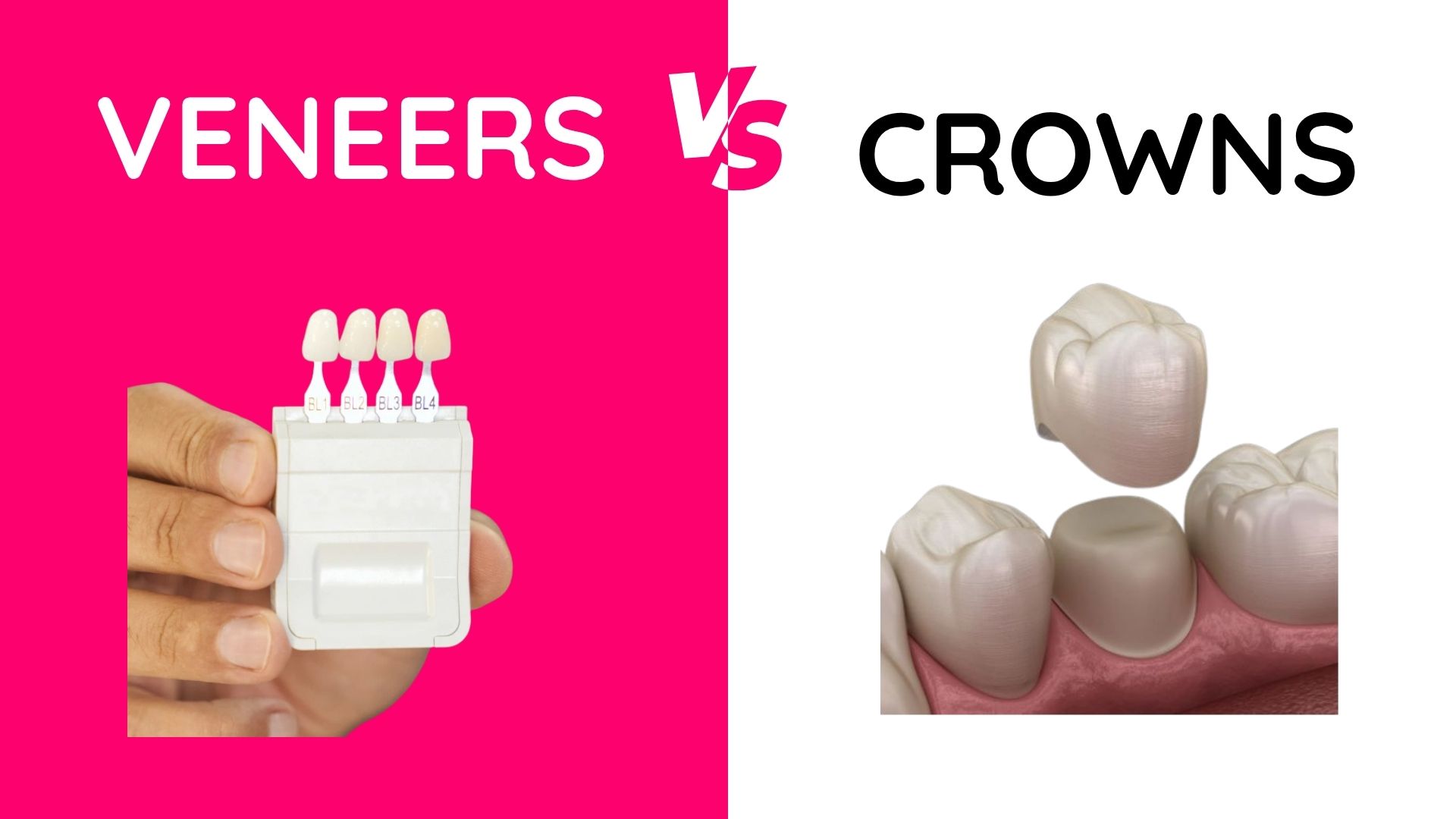
Veneers and crowns both improve tooth appearance, but they serve different clinical purposes. Veneers cover the front surface of a tooth, while crowns cover the entire visible tooth. The choice depends on tooth structure, damage, decay, bite forces, enamel, and the desired cosmetic change. Let’s cover veneers vs. crowns in this article.
What is the main difference between veneers and crowns?
Veneers cover the front of a tooth for primarily cosmetic changes, while crowns cover the tooth to restore strength, function, and appearance.
Veneers are thin porcelain shells bonded to the front of a tooth. They can address discoloration, minor chips, uneven shape, small gaps, and mild alignment concerns. Crowns are full-coverage restorations placed over a prepared tooth. They are commonly used when a tooth is weakened, cracked, extensively restored, or significantly damaged.
The dentist must assess the tooth before choosing either restoration.
When are veneers usually appropriate?
Veneers are generally appropriate when a tooth is structurally sound but has cosmetic concerns involving color, shape, size, or minor surface defects.
Veneers may be considered for persistent discoloration, small chips, irregular edges, minor spacing, or mild shape differences. Adult & Pediatric Dental Studio describes its veneers as custom-made porcelain shells bonded to the front surfaces of teeth.
Veneer treatment can involve enamel preparation, impressions or digital records, laboratory fabrication, and bonding. Preparation varies by case. Research has found favorable survival and success for ceramic veneers bonded to enamel, with poorer outcomes when more dentin was exposed.
Active decay or uncontrolled gum disease should be addressed before elective veneer treatment.
When is a crown a better fit?
A crown is usually considered when a tooth needs substantial structural protection in addition to an improvement in appearance.
Crowns cover the visible portion of a tooth and can restore strength, shape, and function. They may be recommended for severely chipped teeth, cracked teeth, extensive decay, large fillings, substantial wear, or significant loss of natural structure.
Adult & Pediatric Dental Studio also uses crowns for implant coverage, bridge support, and severely discolored or misshapen teeth. Its process includes examination, tooth preparation, custom fabrication, and final placement.
For structurally compromised teeth, full coverage can provide protection that a veneer cannot. Clinical evidence shows strong five-year survival for several commonly used ceramic and metal-ceramic crown categories, although outcomes vary by material and clinical situation.
How do veneers and crowns compare in tooth preparation?
Veneers generally require less tooth reduction than crowns because they cover only the front surface rather than the entire visible tooth.
Veneer preparation focuses on creating space for the shell while preserving healthy structure where clinically appropriate. Crown preparation requires reduction around the tooth so the full-coverage restoration can fit.
Less preparation does not mean every veneer is minimally invasive. Preparation depends on tooth position, existing restorations, desired shape, material thickness, and treatment design. Adult & Pediatric Dental Studio adult dentistry service includes both veneers and crowns.
For patients comparing treatments, remaining healthy enamel is an important consideration because enamel bonding has shown favorable veneer outcomes.
Which option can last longer?
Both veneers and crowns can provide long-term service, but longevity varies with material, tooth condition, bite forces, oral hygiene, and maintenance.
Research does not support one universal lifespan for every restoration. A systematic review of porcelain laminate veneers estimated a 10-year cumulative survival rate of 95.5%.
A recent systematic review reported five-year crown survival rates ranging from about 90% to 98.5% across several ceramic and metal-ceramic categories.
Daily brushing, interdental cleaning, professional examinations, and avoiding hard-object chewing can help protect restorations. Grinding or clenching can increase mechanical stress.
What risks should you consider with veneers and crowns?
Veneers can fracture or debond, while crowns can develop complications involving the restoration, tooth, gums, or underlying structure.
Reported veneer complications include fracture, debonding, and marginal discoloration. Crowns can chip, fracture, loosen, or develop decay around the tooth margin when oral hygiene is inadequate.
Neither restoration makes the underlying tooth immune to disease. Conventional preparation is also irreversible because natural tooth structure is removed.
If a tooth is chipped, the appropriate restoration depends on the extent of damage. Adult & Pediatric Dental Studio article about fixing a chipped tooth explains how bonding, veneers, and crowns can address different levels of tooth damage.
How much do veneers and crowns cost?
The cost depends on the material, number of teeth, laboratory fees, preparation, location, insurance benefits, and whether treatment is cosmetic or restorative.
Veneers are commonly considered cosmetic and may receive limited or no dental insurance coverage. Crowns may receive partial coverage when medically necessary, but benefits vary by plan.
Costs can also change when additional treatment is needed. Examples include decay treatment, gum therapy, replacement of defective restorations, or endodontic treatment.
How should you choose between veneers and crowns?
The appropriate choice depends on how much healthy tooth structure remains and whether the tooth needs cosmetic enhancement, structural protection, or both.
A dental examination should assess enamel, decay, cracks, existing fillings, gum health, bite forces, tooth position, and neighboring teeth.
If the tooth is healthy and the main concern is appearance, a veneer may be considered. If the tooth is weakened or extensively damaged, a crown may provide the required coverage and protection. Different teeth can require different restorations.
Adult & Pediatric Dental Studio provides cosmetic dental care in Manalapan, including veneers and crowns. A consultation can determine which treatment fits the condition of each tooth and your smile goals.
FAQs
Are veneers or crowns better for discolored teeth?
Veneers may be appropriate for persistent discoloration when the tooth is otherwise healthy, while crowns may be considered when discoloration accompanies significant structural damage.
Do veneers require less tooth removal than crowns?
Yes, veneers generally require less tooth reduction because they cover the front surface rather than the entire visible tooth.
Are dental veneers permanent?
No, veneers are not considered permanent and may eventually require replacement because of fracture, debonding, wear, or other complications.
When does a chipped tooth need a crown instead of a veneer?
A crown may be needed when a chip has significantly weakened or damaged the tooth and greater structural coverage is required.
Can dental insurance cover veneers or crowns?
Veneers are often considered cosmetic, while crowns may receive coverage when medically necessary, but benefits depend on the individual dental plan.