200 Bridge Plaza Dr, Manalapan Township, NJ 07726

If you’re stressing about your child’s first dentist visit, you’re not alone. Most parents either put it off too long or show up with no idea what to expect — and both can make the experience harder for everyone involved. The good news? With a little preparation, a toddler’s first dental appointment can be surprisingly easy, even fun.
According to the American Dental Association (ADA), children should visit the dentist by age one or within six months of their first tooth erupting — whichever comes first. That might sound early, but these initial visits do a lot more than just check teeth. They lay the foundation for a lifetime of healthy oral habits.
At Adult & Pediatric Dental Studio in Monroe, NJ, we see families navigate this milestone every week. Here’s everything you need to know before you walk through our door.
Why the First Dental Visit Matters More Than You Think
Many parents assume baby teeth don’t need professional care since they’ll fall out anyway. This is one of the most common misconceptions in pediatric dentistry — and it can lead to real problems.
Primary (baby) teeth play a critical role in:
- Speech development — teeth help children form sounds and learn to speak clearly
- Nutrition — healthy teeth allow proper chewing and a balanced diet
- Jaw alignment — baby teeth hold space for permanent teeth, guiding them into correct position
- Confidence — untreated tooth decay causes pain, missed school days, and self-consciousness in young children
The CDC reports that tooth decay is one of the most common chronic diseases in children in the United States, yet it’s almost entirely preventable with regular professional care and good oral hygiene habits at home.
Starting early also means your child gets comfortable with dental visits before any real treatment is ever needed — which dramatically reduces dental anxiety later in life.
When Should a Child Have Their First Dental Appointment?
The ADA and the American Academy of Pediatric Dentistry (AAPD) both recommend scheduling your child’s first pediatric dentist appointment by their first birthday or when the first tooth appears.
Here’s a simple breakdown:
| Age | Dental Milestone |
|---|---|
| 6 months | First tooth typically erupts |
| 12 months | First dental visit recommended |
| 2–3 years | All 20 primary teeth usually present |
| 3–6 years | Regular 6-month checkups established |
Waiting until your child is 3 or 4 means two or three years of unchecked development — including early signs of decay, alignment issues, or tongue-tie that could have been caught and addressed much sooner.
What Happens During a Child’s First Dental Visit
The first dental checkup for kids is generally low-pressure and brief. At Adult & Pediatric Dental Studio, we keep the first visit comfortable and age-appropriate.
Here’s what typically happens:
1. Medical and dental history review We’ll ask about your child’s diet, oral habits (pacifier, thumb-sucking, bottle use), fluoride exposure, and any concerns you’ve noticed.
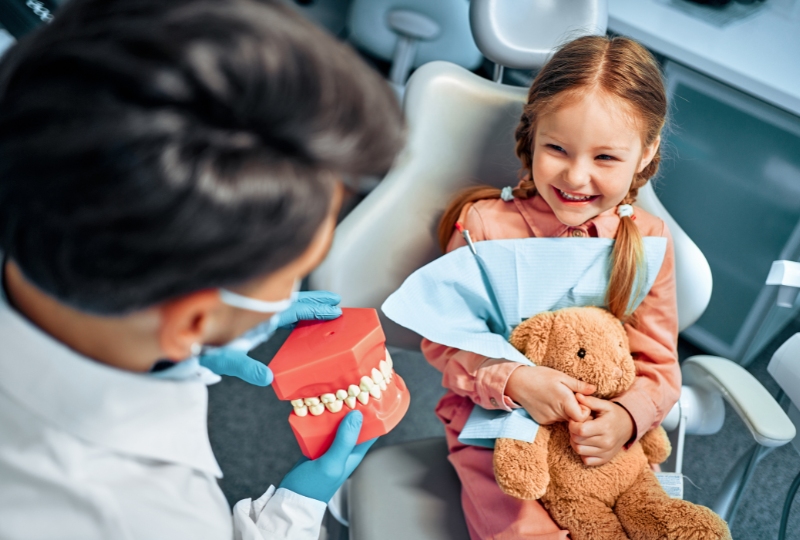
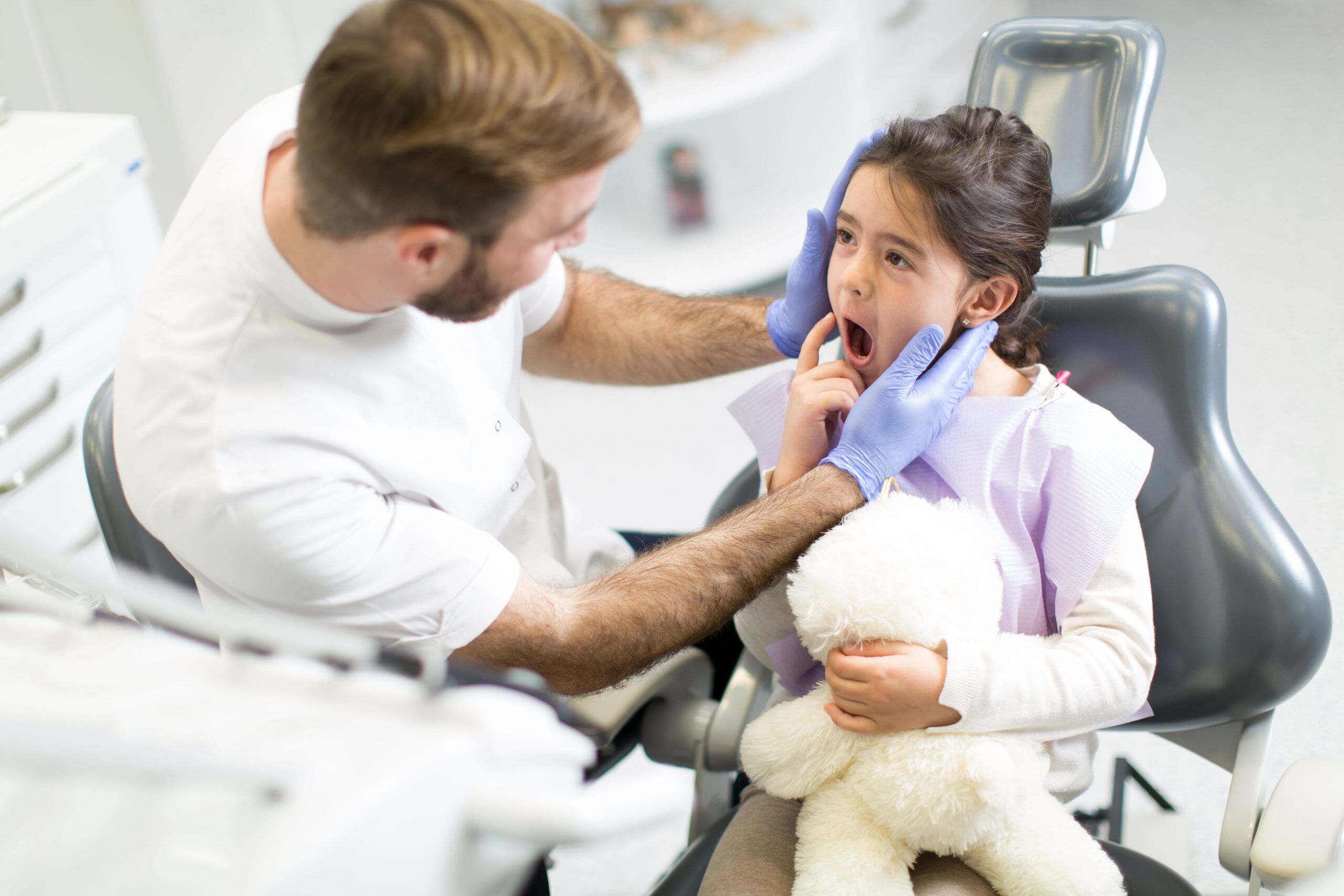
2. Gentle oral examination The dentist will examine your child’s teeth, gums, jaw, and bite. For very young toddlers, this is often done with the child sitting in the parent’s lap.
3. Cleaning (if appropriate) For toddlers with just a few teeth, a gentle cleaning and polishing may be done. For older children, a more thorough cleaning is typical.
4. Fluoride assessment We’ll evaluate fluoride needs based on your water source, diet, and cavity risk. Fluoride varnish may be applied to strengthen enamel.
5. Parent education This is actually one of the most important parts of the first visit to the dentist for children. We’ll walk you through proper brushing techniques for toddlers, diet recommendations, and what habits to watch for as your child grows.
The entire appointment usually takes 30–45 minutes, and most toddlers handle it better than their parents expect.
How to Prepare Your Toddler for Their First Dentist Visit
Preparation makes a significant difference in how a child experiences their first time seeing a dentist. Here’s what actually works:
Start Talking About It Early
Don’t wait until the night before. A few weeks out, mention in passing that you’re going to visit a special tooth doctor. Keep your language positive and neutral — avoid saying things like “it won’t hurt” (which plants the idea of pain) or “don’t be scared” (which suggests there’s something to fear).
Read Books or Watch Videos About Dental Visits
There are excellent picture books designed specifically for this purpose, such as “The Berenstain Bears Visit the Dentist” or “Show Me Your Smile: A Visit to the Dentist” from the Dora the Explorer series. These help normalize the experience before it happens.
Play “Dentist” at Home
Let your child be the dentist. Use a toothbrush to count each other’s teeth. Say “open wide” in a playful way. This familiarizes them with the physical sensations and vocabulary in a comfortable setting.
Don’t Project Your Own Anxiety
This is harder than it sounds. Children pick up on parental stress intuitively. If you had negative dental experiences growing up, try not to share those stories with your toddler. Your calm confidence signals safety to them.
Schedule Wisely
Book the appointment at a time when your child is typically rested and cooperative — usually mid-morning. Avoid scheduling during nap time or right before meals.
Bring a Comfort Item
A favorite stuffed animal or blanket can make the experience feel less unfamiliar. Most pediatric dental offices, including ours, welcome comfort objects in the treatment room.
What to Avoid Before the First Appointment
A few common mistakes parents make that can unintentionally make the experience harder:
- Avoid using the dentist as a threat. Saying “if you don’t brush, the dentist will hurt you” creates fear that can last a lifetime.
- Don’t overpromise. Telling your child “nothing will happen” sets unrealistic expectations. Better to say “we’re just going to look at your teeth.”
- Skip unnecessary detail. Young children don’t need a full explanation of what instruments look like or what fluoride is. Keep it simple.
- Don’t bribe with sweets. The irony is obvious — reward the dental visit with an activity, not sugar.
Monroe, NJ Parents: What to Expect at Adult & Pediatric Dental Studio
Families throughout Monroe Township and surrounding Middlesex County communities trust Adult & Pediatric Dental Studio for their children’s dental care. Our approach to Monroe pediatric dental care is rooted in patience, child-friendly communication, and building trust with young patients from the very first visit.
We treat children with the same clinical precision and warmth we extend to our adult patients — making us a true family dental practice, not just a pediatric-only office. Parents appreciate being able to bring the whole family under one roof.
If you’d like to know more about what to expect before arriving, visit our dedicated first visit page where we walk through every step of the process in detail.
Building a Dental Home Early
The concept of a “dental home” — an ongoing relationship between a child, their family, and a dentist — is something the American Academy of Pediatric Dentistry actively promotes. When children have a consistent dental provider from an early age, they experience:
- Fewer dental emergencies due to regular monitoring
- Lower rates of dental anxiety as adults
- Better long-term oral health outcomes
- More consistent preventive care habits reinforced by professional guidance
Think of the first dental exam for toddlers not as a one-time event, but as the first chapter in a long story of healthy teeth.
Conclusion
The first dentist visit for kids doesn’t have to be stressful — for you or for your toddler. By starting early, preparing thoughtfully, and choosing a dental team experienced with young children, you’re giving your child a genuine head start on lifelong oral health.
Whether your child has their first tooth or a full smile of baby teeth, now is a great time to establish care with a children’s dentist serving families in Monroe, NJ, who understands how to make dental visits comfortable and positive for little ones.
FAQs
Q: When should a child have their first dentist visit?
The ADA and AAPD recommend scheduling a child’s first dental appointment by their first birthday, or within six months of their first tooth appearing — whichever comes first. Early visits help detect problems before they develop and build comfort with dental care from a young age.
Q: What happens at a toddler’s first dental appointment?
A typical first visit includes a gentle oral exam, a review of your child’s oral and medical history, a cleaning if appropriate, a fluoride assessment, and parent guidance on brushing technique, diet, and habits to watch for. Most appointments take 30–45 minutes and are low-stress.
Q: How do I prepare my toddler for the dentist?
Talk about the visit in positive, simple terms a few weeks ahead of time. Read dental-themed books, play “dentist” at home, and avoid projecting fear or anxiety. Schedule the appointment when your child is typically rested — usually mid-morning — and bring a comfort object if needed.
Q: Is a children’s dentist different from a regular dentist?
A pediatric dentist has two to three years of additional training beyond dental school specifically focused on children’s development, behavior management, and treatment. Family dental practices like Adult & Pediatric Dental Studio are equipped to treat both children and adults, offering continuity of care for the whole family.
Q: What if my toddler cries or refuses to cooperate during the visit?
This is completely normal and experienced pediatric dental teams expect it. Dentists trained in working with young children use techniques specifically designed to manage fear and resistance — including tell-show-do, distraction, and pacing the visit to the child’s comfort level. Most children relax significantly after the first few visits.